Democracy of Sound: Music Piracy and the Remaking of American Copyright in the Twentieth Century
Book information
Description
Democracy Of Sound Tells The Story Of The Pirates, Radicals, Jazzbos, Deadheads, And Djs Who Challenged The Record Industry For Control Of Recorded Sound Throughout The Twentieth Century. A Political And Cultural History, It Shows How The Primacy Of Intellectual Property Gradually Eclipsed An American Political Tradition That Was Suspicious Of Monopolies And Favored Free Competition.xi, 257 pages : 25 cm"It was a time when music fans copied and traded recordings without permission. An outraged music industry pushed Congress to pass anti-piracy legislation. Yes, that time is now; it was also the era of Napster in the 1990s, of cassette tapes in the 1970s, of reel-to-reel tapes in the 1950s, even the phonograph epoch of the 1930s. Piracy, it turns out, is as old as recorded music itself. In Democracy of Sound, Alex Sayf Cummings uncovers the little-known history of music piracy and its sweeping effects on the definition of copyright in the United States. When copyright emerged, only visual material such as books and maps were thought to deserve protection; even musical compositions were not included until 1831. Once a performance could be captured on a wax cylinder or vinyl disc, profound questions arose over the meaning of intellectual property. Is only a written composition defined as a piece of art? If a singer performs a different interpretation of a song, is it a new and distinct work? Such questions have only grown more pressing with the rise of sampling and other forms of musical pastiche. Indeed, music has become the prime battleground between piracy and copyright. It is compact, making it easy to copy. And it is highly social, shared or traded through social networks--often networks that arise around music itself. But such networks also pose a counter-argument: as channels for copying and sharing sounds, they were instrumental in nourishing hip-hop and other new forms of music central to American culture today. Piracy is not always a bad thing. An insightful and often entertaining look at the history of music piracy, Democracy of Sound offers invaluable background to one of the hot-button issues involving creativity and the law"--Provided by publisherIncludes bibliographical references (pages 219-246) and indexMusic, machines, and monopoly -- Collectors, con men, and the struggle for property rights -- Piracy and the rise of new media -- Counterculture, popular music, and the bootleg boom -- The criminalization of piracy -- Deadheads, hip hop, and the possibility of compromise -- The global war on piracy -- Conclusion: piracy as social media
Similar books

Brain Magnet: Research Triangle Park and the Idea of the Idea Economy
2020 · EPUB
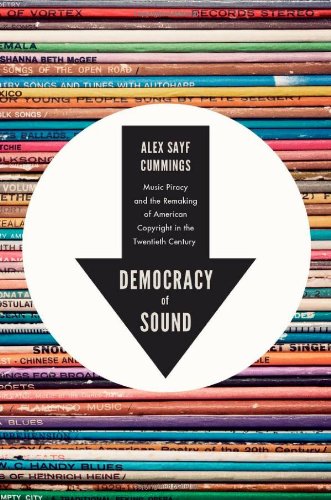
Democracy of Sound: Music Piracy and the Remaking of American Copyright in the Twentieth Century
2013 · PDF

Democracy of Sound: Music Piracy and the Remaking of American Copyright in the Twentieth Century
2013 · MOBI
Democracy of Sound: Music Piracy and the Remaking of American Copyright in the Twentieth Century
2013 · EPUB

MySQL® Notes for Professionals book
2018 · PDF

MrExcel 2022: Boosting Excel
2022 · PDF

MrExcel 2022: Boosting Excel
2022 · PDF

Session C11: Ancient Cultural Landscapes in South Europe – their Ecological Setting and Evolution, Session C22: Gardeners from South America, Session S04: Agro-Pastoralism and Early Metallurgy Sessions, Session WS29: The Idea of Enclosure in Recent Iberian Prehistory, Session C88: Rhytmes et causalites des dynamiques de l'anthropisation en Europe entre 6500 ET 500 BC: Hypotheses socio-culturelles et/ou climatiques: Proceedings of the XV UISPP World Congress (Lisbon 4-9 September 2006) / Actes du XV Congrès Mondial (Lisbonne 4-9 Septembre 2006) Vol.36
2010 · PDF