Camera Trapping for Wildlife Research
Book information
Description
Title Page......Page 3 Copyright Page......Page 4 Contents......Page 5 About the editors......Page 10 About the contributors......Page 11 Foreword......Page 13 Preface......Page 15 Acknowledgements......Page 17 Online resources......Page 19 1. Introduction......Page 20 1.1 A brief history of camera trapping......Page 21 1.2 Efficiency of camera trapping and advantages over other wildlife detection methods......Page 22 2.2 Camera trap systems......Page 29 2.3 Camera features to consider when choosing models......Page 32 2.4 Camera performance in relation to study designs......Page 38 2.4.2 Occupancy studies (species and community-level)......Page 39 2.4.3 Capture–recapture......Page 40 2.4.4 Behavioural studies......Page 41 2.5 Review of currently available camera trap models and comparative performance tests......Page 42 2.6 Limitations and future developments of camera technology......Page 44 3.1 Pre-field planning......Page 49 3.2.2 Trail settings......Page 53 3.2.3 Checklist of actions to activate the camera trap......Page 60 3.2.5 Checklist of actions when checking and removing the camera trap......Page 61 3.3 After the fieldwork......Page 63 4.1 Introduction......Page 65 4.2 Camera trap data......Page 66 4.2.1 Camera trap conceptual components......Page 67 4.3.1 Setting up a camera trap project......Page 68 4.3.2 Processing camera trap data......Page 71 4.3.3 Retrofitting legacy camera trap data......Page 73 4.4 Camera trap data interoperability......Page 75 4.5 Wildlife Insights – the camera trap data network......Page 76 4.6 The future: more repositories, better data management and analytical services......Page 77 5.1 Introduction......Page 79 5.2 Raw descriptors: naïve occupancy and detection rate as a relative abundance index......Page 81 5.3 Sampling design......Page 83 5.4 Sampling completeness......Page 86 5.5.1 Raw data format (.CSV file)......Page 87 5.5.2 Importing data in R......Page 89 5.5.3 Deriving sampling effort, events and species’ list......Page 95 5.5.4 Naïve occupancy......Page 100 5.5.5 Species accumulation......Page 101 5.5.6 Activity pattern......Page 102 5.5.7 Presentation and interpretation of results......Page 104 5.6 Conclusions......Page 110 6.1 Introduction......Page 113 6.2.1 Basic single-season model......Page 115 6.2.2 Covariate modeling and assessing model fit......Page 119 6.2.3 Multi-season occupancy models......Page 121 6.3 Sampling design......Page 122 6.4.1 Deciding the best number of sites and sampling duration......Page 125 6.4.2 Post-hoc discretisation of sampling duration in sampling occasions......Page 127 6.5.1 Single-season occupancy analysis......Page 129 6.5.2 Multi-season occupancy analysis......Page 139 6.6 Conclusions......Page 146 7.1 Introduction......Page 150 7.2.1 Camera traps......Page 152 7.2.3 Camera trap sites and camera trap placement......Page 153 7.3.1 Season, survey duration and demographic closure......Page 157 7.3.2 Spatial sampling and geographic closure......Page 159 7.4 Case study: the Eurasian lynx......Page 168 7.4.1 Analytical steps during field work......Page 169 7.4.2 Dates and times in R......Page 177 7.4.3 Analysis with secr......Page 180 7.4.4 Abundance and density estimation in conventional (i.e. non-spatial) capture–recapture models......Page 200 7.5 Conclusions......Page 201 8.2 Advantages and disadvantages of camera trapping compared to other technologies used to study animal behaviour......Page 210 8.4 The importance of choosing the site in relation to a variety of study aims......Page 214 8.5 Diel activity pattern and activity pattern overlap between species......Page 216 8.5.1 Definition and assumptions of the activity level measured by means of camera traps......Page 218 8.5.2 Overlap between pairs of activity patterns......Page 219 8.6 Case studies......Page 220 8.6.1 Marking behaviour studies in Eurasian lynx and brown bear......Page 221 8.6.2 Comparison of activity patterns......Page 226 8.7 Conclusions......Page 239 9.1 Introduction......Page 245 9.2 Measuring biodiversity while accounting for imperfect detection......Page 246 9.3 Static (or single-season) multi-species occupancy models......Page 247 9.3.1 Case study......Page 252 9.4 Dynamic (or multi-season) multi-species occupancy models......Page 258 9.4.1 Case study......Page 261 9.5 Conclusions......Page 275 10.1 Introduction......Page 280 10.2 A national monitoring system for wildlife: from idea to a functioning system......Page 285 10.2.1 A global model for national monitoring: The TEAM Camera Trap Network......Page 287 10.2.2 Goals and targets of a national monitoring system for wildlife......Page 288 10.2.3 Design of a national monitoring system......Page 289 10.2.4 Implementation......Page 293 10.2.5 Cost components......Page 301 10.3.1 African golden cats in Bwindi Impenetrable Forest, Uganda......Page 305 10.3.2 Effects of hunting at the Volcán Barva transect, Costa Rica......Page 307 10.4 Conclusions......Page 310 11.1 Introduction......Page 314 11.3 Citizen science research process with a special focus on camera trapping studies......Page 316 11.3.1 Data collection and identification......Page 317 11.3.2 Data management and cyber-infrastructure......Page 318 11.4 Examples of camera trap citizen science projects......Page 319 11.5 What is the future of citizen science camera trapping?......Page 323 11.5.1 Training......Page 324 11.5.2 Data integrity......Page 325 11.5.3 Motivation, engagement and retention in citizen science......Page 327 11.5.4 Cultural sensitivity and privacy......Page 328 11.5.5 Technology and e-innovations in camera trapping......Page 329 11.6 Conclusions......Page 332 Appendices......Page 338 Glossary......Page 403 Index......Page 411
Similar books
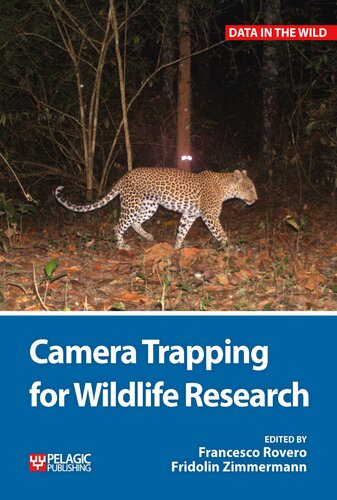
Camera Trapping for Wildlife Research (Data in the Wild)
2016 · EPUB

Camera Trapping for Wildlife Research (Data in the Wild)
2016 · PDF

MySQL® Notes for Professionals book
2018 · PDF

MrExcel 2022: Boosting Excel
2022 · PDF

MrExcel 2022: Boosting Excel
2022 · PDF

Session C11: Ancient Cultural Landscapes in South Europe – their Ecological Setting and Evolution, Session C22: Gardeners from South America, Session S04: Agro-Pastoralism and Early Metallurgy Sessions, Session WS29: The Idea of Enclosure in Recent Iberian Prehistory, Session C88: Rhytmes et causalites des dynamiques de l'anthropisation en Europe entre 6500 ET 500 BC: Hypotheses socio-culturelles et/ou climatiques: Proceedings of the XV UISPP World Congress (Lisbon 4-9 September 2006) / Actes du XV Congrès Mondial (Lisbonne 4-9 Septembre 2006) Vol.36
2010 · PDF

THE BRITISH ARMY IN INDIA: ITS PRESERVATION BY AN APPROPRIATE CLOTHING, HOUSING, LOCATING, RECREATIVE EMPLOYMENT, AND HOPEFUL ENCOURAGEMENT OF THE TROOPS. with AN APPENDIX ON INDIA : THE CLIMATE OP ITS HILLS ; THE DEVELOPMENT OF ITS RESODRCBS, INDUSTRY, AND ARTS ; THE ADMINISTRATION OF JUSTICE ; THE BLACK ACT ; THE PROGRESS OF CHRISTIANITY ; THE TRAFFIC IN OPIUM ; THE VALUE OF INDIA ; PERMANENT CAUSES OF DISAFFECTION, AND OF THE RECENT REBELLION ; THE TRADITIONARY POLICY; MISGOVERNMENT BY NATIVE RULERS ; ANNEXATIONS OF THEIR TERRITORY, ETC.
1858 · PDF

Idries Shah 27 Books Collection : A Perfumed Scorpion, A Veiled Gazelle, Caravan of Dreams, Darkest England, Destination Mecca, Evenings with Idries Shah, Knowing How to Know, Learning How to Learn, Letters and Lectures of Idries Shah, Neglected aspects of Sufi study, Observations, Oriental Magic, Reflections, Seeker after Truth, Special Illumination, Special Problems in the study of Sufi ideas, Sufi thought and action, Tales of the Dervishes, The Dermis Probe, The Elephant in the Dark, The Englishman Handbook, Idries Shah Antology, The Magic Monastery, The natives are restless, wisdom of the Idiots PDF.
2022 · PDF