The Revolutionary City: Urbanization and the Global Transformation of Rebellion
Book information
Description
How and why cities have become the predominant sites for revolutionary upheavals in the contemporary world Examining the changing character of revolution around the world, The Revolutionary City focuses on the impact that the concentration of people, power, and wealth in cities exercises on revolutionary processes and outcomes. Once predominantly an urban and armed affair, revolutions in the twentieth century migrated to the countryside, as revolutionaries searched for safety from government repression and discovered the peasantry as a revolutionary force. But at the end of the twentieth century, as urban centers grew, revolution returned to the city―accompanied by a new urban civic repertoire espousing the containment of predatory government and relying on visibility and the power of numbers rather than arms. Using original data on revolutionary episodes since 1900, public opinion surveys, and engaging examples from around the world, Mark Beissinger explores the causes and consequences of the urbanization of revolution in the late twentieth and early twenty-first centuries. Beissinger examines the compact nature of urban revolutions, as well as their rampant information problems and heightened uncertainty. He investigates the struggle for control over public space, why revolutionary contention has grown more pacified over time, and how revolutions involving the rapid assembly of hundreds of thousands in central urban spaces lead to diverse, ad hoc coalitions that have difficulty producing substantive change. The Revolutionary City provides a new understanding of how revolutions happen and what they might look like in the future. Cover Contents List of Illustrations List of Tables Preface Introduction. Revolution and the City 1. A Spatial Theory of Revolution 2. The Growth and Urbanization of Revolution 3. The Urban Civic Revolutionary Moment 4. The Repression–Disruption Trade-off and the Shifting Odds of Success 5. Revolutionary Contingency and the City 6. Public Space and Urban Revolution 7. The Individual and Collective Action in Urban Civic Revolution 8. The Pacification of Revolution 9. The Evolving Impact of Revolution 10. The City and the Future of Revolution Appendix 1. Construction of Cross-National Data on Revolutionary Episodes Appendix 2. Revolutionary Episodes, 1900–2014 Appendix 3. Data Sources Used in Statistical Analyses Appendix 4. Choices of Statistical Models References Index
Similar books

Nationalist mobilization and the collapse of the Soviet State
2002 · PDF

Scientific Management, Socialist Discipline, and Soviet Power
1988 · PDF

Scientific Management, Socialist Discipline, and Soviet Power
1988 · PDF
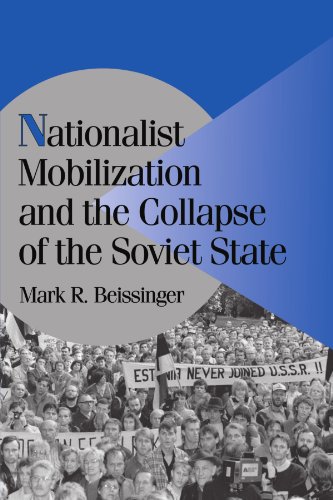
Nationalist Mobilization and the Collapse of the Soviet State
2002 · PDF

Nationalist Mobilization and the Collapse of the Soviet State
2002 · PDF

MySQL® Notes for Professionals book
2018 · PDF

MrExcel 2022: Boosting Excel
2022 · PDF

MrExcel 2022: Boosting Excel
2022 · PDF