How Europe Made the Modern World: Creating the Great Divergence
Book information
Description
One thousand years ago, a traveler to Baghdad or the Chinese capital Kaifeng would have discovered a vast and flourishing city of broad streets, spacious gardens, and sophisticated urban amenities; meanwhile, Paris, Rome, and London were cramped and unhygienic collections of villages, and Europe was a backwater. How, then, did it rise to world preeminence over the next several centuries? This is the central historical conundrum of modern times. How Europe Made the Modern World draws upon the latest scholarship dealing with the various aspects of the West’s divergence, including geography, demography, technology, culture, institutions, science and economics. It avoids the twin dangers of Eurocentrism and anti-Westernism, strongly emphasizing the contributions of other cultures of the world to the West’s rise while rejecting the claim that there was nothing distinctive about Europe in the premodern period. Daly provides a concise summary of the debate from both sides, whilst also presenting his own provocative arguments. Drawing on a wide range of primary and secondary sources, and including maps and images to illuminate key evidence, this book will inspire students to think critically and engage in debates rather than accepting a single narrative of the rise of the West. It is an ideal primer for students studying Western Civilization and World History courses. Cover page Halftitle page Title page Copyright page Dedication CONTENTS MAPS PREFACE INTRODUCTION: ALCHEMY OF CIVILIZATION Historical debates Alchemy of civilization Structure of the book CHAPTER 1 THE SUPREMACY OF LAW The early emergence of law Europe after the fall of Rome Intellectual foundations of European law The rise of European legal systems CHAPTER 2 A PASSION FOR TRAVEL Early travelers Europeans explore the world CHAPTER 3 TSUNAMI OF THE PRINTED WORD The emergence of writing The printing revolution in Europe Why not China? CHAPTER 4 RIGHTS AND LIBERTIES Delegation of authority in premodern Eurasian societies The emergence of liberties and immunities in Europe Urban self-government Representative assemblies The conciliar movement Christian liberties Theories of political resistance CHAPTER 5 AN ANXIETY FOR KNOWING Early developments Medieval and early modern European natural philosophy Breakthroughs toward modern science Why Europe? CHAPTER 6 THE REPUBLIC OF LETTERS Intellectuals Ordinary people Synergies of practical and theoretical knowledge CHAPTER 7 BREAKING WITH TRADITION Inspired transformations War and military technology A higher status for women Breaking the power barrier A rising standard of living CONCLUSION What did Europe make modern? How did Europe do it? NOTES WORKS CITED INDEX
Similar books

Pillars of the Profession: The Correspondence of Richard Pipes and Marc Raeff
2018 · PDF

Seven Myths of the Russian Revolution
2023 · PDF

Crime and Punishment in Russia: A Comparative History from Peter the Great to Vladimir Putin
2018 · PDF

The Rise of Western Power: A Comparative History of Western Civilization
2021 · PDF

Hammer, Sickle, and Soil
2017 · EPUB
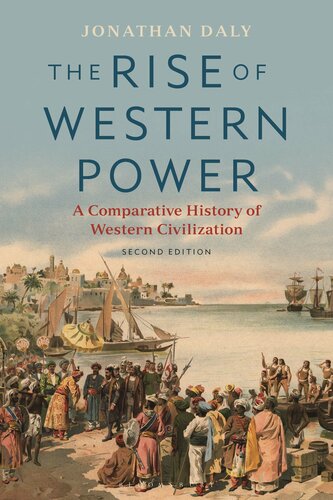
The Rise of Western Power: A Comparative History of Western Civilization
2020 · EPUB

Historians Debate the Rise of the West
2014 · EPUB

MySQL® Notes for Professionals book
2018 · PDF