Willing and Understanding: Late Medieval Debates on the Will, the Intellect, and Practical Knowledge
Book information
Description
Willing and Understanding elucidates a variety of issues in and approaches to debating the will-intellect interplay in the late Middle Ages. Authored by prominent scholars in the field, the contributions offer different perspectives on the development of late medieval theories of the will. Charting a dense map of voluntarist and epistemological ideas--entrenched leitmotifs of late medieval philosophy, seminal insights sparking original trends, and ephemeral novelties--the volume is a testimony to the conceptual multidimensionality and ethical complexity of the past and present iterations of the debate on the will. Contributors are Pascale Bermon, Magdalena Bieniak, Michael W. Dunne, Riccardo Fedriga, Giacomo Fornasieri, Tobias Hoffmann, Severin V. Kitanov, Monika Michalowska, Riccardo Saccenti, Sonja Schierbaum, Michael Szlachta, Lukasz Tomanek, and Francesco Omar Zamboni. Contents Preface Notes on Contributors 1 The Complexity of Late Medieval Debates on the Will 1 Introduction* 2 A Short Overview of a Long Debate 3 The Rise of Philosophical Ethics 4 The Variety of Aristotelian Traditions in the Thirteenth Century 5 The Will-Intellect Problem in the Fourteenth Century 6 New Methods and Solutions in the Discourse on the Will: Fourteenth-Century Oxford References Primary Souces Secondary Sources 2 Fear and Conditional Will in Stephen Langton’s Quaestiones and in the Summa Halensis 1 Introduction* 2 Stephen Langton’s Quaestiones theologiae 2.1 The Conditional Will 2.2 The Imperfect Will of the Devil 3 The Summa Halensis 3.1 The Conditional Will 3.2 The Devil’s Imperfect Will in the Summa Halensis 4 Conclusion Abbreviations Manuscripts Primary Sources Secondary Sources 3 What Tips the Scales? 1 Introduction 2 The Historical and Doctrinal Background 3 The Will and Power 3.1 The Essence of Power 3.2 The Essence of the Will 3.3 Debates on the Essence of the Will 4 Motivation 4.1 The Essence of Motivation 4.2 Benefit and Harm 4.3 The Rejection of Beneficence 5 Choice 5.1 The Causal Structure behind Choice 5.2 The Debate on the Necessity of Motivation 5.3 The Debate on the Sufficiency of Motivation 6 Conclusion Manuscripts Primary Sources Secondary Sources 4 How Do Intellect and Will Interact? 1 Introduction 2 The Determination-Exercise Distinction 3 Godfrey of Fontaines and the Determination-Exercise Distinction 4 An Alternative Model of How the Intellect and the Will Interact 5 Conclusion Primary Sources Secondary Sources 5 Understanding and Acting 1 Introduction 2 A Thirty-Year-Long Discussion 3 Deliberation as a Cause of Contingent Events 4 The Proper Object of the Practical Intellect 5 Conclusion Abbreviations Manuscripts Primary Sources Secondary Sources 6 John of Pouilly’s Intellectualist Reading of the March 7, 1277 Condemnation 1 Introduction* 2 Intellect and Will in Quodlibet II, Question 11 3 Henry of Ghent’s Use of Tempier’s Articles 3.1 The Context 3.2 The Articles Discussed by Henry 3.2.1 Article 9 (of 1270) 3.2.2 Article 134 3.2.3 Article 129 3.2.4 Article 130 4 Pouilly’s Discussion of Tempier’s Articles 4.1 The Articles Discussed by Henry 4.1.1 Article 9 (of 1270) 4.1.2 Article 134 4.1.3 Article 129 4.2 Articles Pouilly Adds to the Discussion 4.2.1 Article 130 4.2.2 Article 131 4.2.3 Article 135 4.2.4 Article 159 4.2.5 Article 163 4.3 Pertinent Articles Pouilly Omits 4.3.1 Articles 158 and 194 4.3.2 Article 208 5 Conclusion Manuscripts Primary Sources Secondary Sources 7 Cognitive Attention and Impressions 1 Introduction* 2 Active but (not) Voluntary: The Senses and the Intellect in Auriol’s Account of Human Cognition 3 The Will and the Intellect: An Integrated System of Concept Formation 4 Intellectual Cognition as a Voluntary, Conscious Operation: An Assessment of Auriol’s Position 5 Conclusion Manuscripts Primary Sources Secondary Sources 8 Dissolving the Air of Inconsistency 1 Introduction 2 The Apparent Contradiction 3 The Exceptional Case 4 Assessment: Dissolving the Air of Inconsistency 5 Conclusion Primary Sources Secondary Sources 9 Hybernicus contra Thomam 1 Introduction 2 The Will in FitzRalph 3 Is the Will Active or Passive? 4 Contra Thomam? FitzRalph on the Nobility of the Will 5 FitzRalph’s Middle Way 6 Conclusion Manuscripts Primary Sources Secondary Sources 10 Cracking the Code of the Will 1 Introduction* 2 The Intersection of Logic and the Will 3 Voluntary and Involuntary Acts 4 Willing the Antecedent and Willing the Consequent 5 Conclusion Primary Sources Secondary Sources 11 Adam Wodeham’s Analysis and Defense of Free Will 1 Introduction: The Author and the Work 2 Wodeham’s Sources 2.1 Richard FitzRalph 2.2 Richard Campsall 2.3 Richard Kilvington 2.4 William Ockham and John Rodington 3 Key Issues in Wodeham’s Question 6 3.1 The Equitable Distribution of Postmortem Rewards 3.2 Volitional Encumbering 3.3 Conditional and Counter-Factual Willing 4 Wodeham’s Unique Contribution to the Free Will Debate 5 Conclusion Appendix A Brief Comparative Analysis of Wodeham’s Ordinatio, Book I, Dist. 1, q. 6 and Kilvington’s Quaestiones super libros Ethicorum, q. IV Abbreviations References Manuscripts Primary Sources Secondary Sources 12 Gregory of Rimini and the Augustinian Theory of the Will 1 Introduction 2 Gregory’s Newly Discovered Tabulae 3 Nihil est tam in potestate nostra quam ipsum velle 4 Auxilium quo 5 Seeing and Willing: Oculomotor Capture and Voluntary Control 6 Conclusion References Primary Sources Secondary Sources 13 Necessity, Contingency, and Free Will in John of Jandun and John Aurifaber of Halberstadt 1 Introduction* 2 The Current State of Research on John Aurifaber of Halberstadt 3 The Principle of Plenitude 4 The Nature of Necessity and Contingency 5 Free Will and Its Constraints 6 Morality and the Meaning of Law 7 Conclusion Abbreviations Manuscripts Primary Sources Secondary Sources Index of Ancient, Medieval, and Renaissance Names Index of Modern Names
Similar books

Humanity In-Between and Beyond
2023 · EPUB

Humanity In-Between and Beyond
2023 · PDF

Metter le brache al mondo. Compatibilismo, conoscenza e libertà
2016 · EPUB

Storia della filosofia. Per le Scuole superiori. Dall'antichità al Medioevo
2014 · RTF

Storia della filosofia. Per le Scuole superiori. Dall'antichità al Medioevo
2014 · PDF

La filosofia e le sue storie. L'età moderna
2015 · EPUB

La filosofia e le sue storie. L'età contemporanea
2015 · EPUB
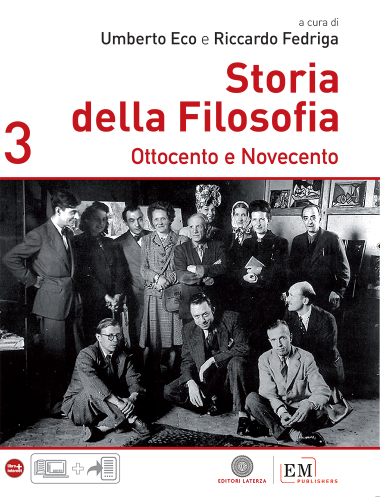
Storia della filosofia. Ottocento e Novecento
2014 · EPUB