Fault Lines in a Rising Asia
Book information
Description
Asia has already risen by most hard-power measures. But without an understanding of the downsides of Asia’s rise, the conventional narrative is incomplete, misleading, and inaccurate. Chung Min Lee explores the fundamental dichotomy that defines contemporary Asia. While the region has been an unparalleled economic success, it is also home to some of the world’s most dangerous, diverse, and divisive challenges. Contrary to prevailing wisdom, he says, Asia’s rise doesn’t mean the demise of the West. Asia’s rise over the past four decades is one of the most significant geopolitical and geoeconomic developments in world affairs as evinced by China’s, and more recently, India’s, accelerated economic growth. Yet the conventional narrative of Asia’s rise is incomplete, if not misleading, given the fundamental dichotomy that defines contemporary Asia: a region with unparalleled economic success but also home to the world’s most dangerous, diverse, and divisive security, military, and political challenges. How the strategically consequential Asian states manage to ameliorate or even overcome traditional geopolitical tinderboxes across the Taiwan Strait, the Korean Peninsula, and the Indian subcontinent and new zones of strategic competition such as the South China Sea is to going to have a profound impact on the shaping of regional order well into the 21st century.
Similar books
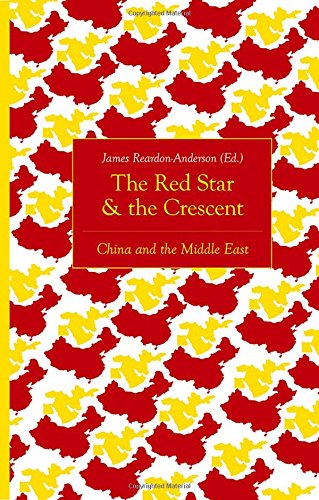
The Red Star and the Crescent: China and the Middle East
2018 · PDF

The Yudhoyono Presidency: Indonesia’s Decade of Stability and Stagnation
2015 · PDF

Soviet Russia and the Far East
1971 · PDF

To Govern China: Evolving Practices of Power
2017 · MOBI

To Govern China: Evolving Practices of Power
2017 · PDF

Expulsion of the Palestinians: The Concept of "Transfer" in Zionist Political Thought, 1882-1948
1992 · PDF

Party Politics in Southeast Asia: Clientelism and Electoral Competition in Indonesia, Thailand and the Philippines
2012 · PDF

China’s Governance Puzzle: Enabling Transparency and Participation in a Single-Party State
2017 · PDF