China and Taiwan in Africa: The Struggle for Diplomatic Recognition and Hegemony
Book information
Description
This edited volume discusses the contest and contestation between China and Taiwan for diplomatic recognition and supremacy on the African continent. Written by a diverse group of international scholars, this volume provides insight into five interlocking questions and areas: the origins of China and Taiwan’s continent-wide competition for supremacy; China and Taiwan’s foreign policy towards Africa during and after the Cold War; the shift in dominance from Taiwan to China; the changing allegiances of African governments; and the implications of ongoing China-Africa-Taiwan relations on the global system, especially on countries in the Global South. This book is divided into three parts. Part One deals primarily with the early history of both Chinas on the continent. Chapters in Part Two discuss the foreign policy of China and Taiwan toward the African continent. Part Three focuses on the shifting alliances and diplomatic allegiance of African countries towards the People’s Republic of China (PRC) and the Republic of China (ROC). Filling the gap in Africa-China-Taiwan studies, this volume will be of interest to researchers and students in the social sciences especially political science, comparative politics, international relations, foreign policy, politics of developing nations, area studies, and Taiwanese/Chinese studies. Preface Acknowledgment Introduction Contents About the Editor About the Contributors Abbreviations Part I: Contest and Contestations: The Early Years Chapter 1: Sovereignty and International Recognition: Exploring the Complex China-Africa-Taiwan Relations Introduction Understanding International Recognition and Its Implications on Statehood The Declaratory or Constitutive Theory of Statehood? A Framework of Analysis Taiwan-China Relations: A Background Taiwan-Africa-China Relations: Analytical Perspective Conclusion Bibliography Chapter 2: China in Africa: Historical Roots, 1949–1970 Africa in Chinese Geopolitics During the 1950s and 1960s China and the Third World Card Africa in Chinese Foreign Policy of the 1960s Chinese Foreign Policy Guidelines in Africa The Pillars of Chinese Foreign Policy in Africa The Chinese Turn to the United Nations: The Role of African Countries Bibliography Books Journal Articles Website Contents Chapter 3: The Statehood of Taiwan Introduction From Authoritarianism to Democracy From Japanese Colony to One Province of China KMT’s Authoritarian Rule and Taiwan’s Road to Democracy Taiwan’s Democratization and the Seek for Taiwan’s Statehood From Hostile to Cooperative Cross-Strait Relations and the US Policy Toward Taiwan The Fluctuation of Cross-Strait Relations Between Hostility and Engagement China’s Taiwan Policy: The One-China Principle US Taiwan Policy: The One-China Policy The Emergence of Taiwanese Nationality In Search of Taiwan’s Statehood Conclusion Bibliography Chapter 4: The Cold War and the China–Taiwan Impasse Introduction The Legacy of the Cold War on Both Sides of the Strait Paths of Military Development Impact of the Korean War Impact of the Sino-Soviet Rupture Impact of the Diplomatic Relations Between China and the USA Political and Economic System Competition Differences in National Identity Between the Two Sides 2016 to Present: The China–Taiwan Impasse After the DPP Regained Power The Appearance of the Current Impasse in Cross-Strait Relations The Legacy of the Cold War and Causes of the Current Impasse Sino-US Confrontation Gives Taiwan Increased Military Support The Hong Kong Issue Highlights the Conflicts Between Cross-Strait Systems and Values The Difficulty of Accepting the 1992 Consensus Due to the Rapid Increase of People Who Favor Taiwan’s Independence Conclusion Bibliography Chapter 5: Japan and the Political Status of Taiwan Introduction Japan’s Role in Shaping the Political Status of Taiwan Japan-China Normalization and Implications for Taiwan Democratization, China Rising, and Japan-Taiwan Relations Tohoku Earthquake and Strengthening of Bilateral Relations Conclusion: Whither Japan and the Status of Taiwan? References Part II: Foreign Policy and International Organizations Chapter 6: China’s Foreign Policy Toward Africa in the Years 1949–1971 Introduction China’s Strategy Toward Africa The Bandung Conference How and Why Did the African States Switched Their Position in Favor of China? The Non-Aligned Movement in the Framework of PRC-Africa Relations PRC and the United States in Africa: Allies or Enemies? Was PRC and Soviet Union on the Same Page About Africa? Conclusion Bibliography Chapter 7: The UN General Assembly Resolution 2758 of 1971 Recognizing the People’s Republic of China as the Legitimate Representative of the State of China Introduction Votes for and Against 1971 UN Resolution and the African UN Member States Votes for and Against the 1971 UN Resolution and the Division of Capitalist UN Member States in Europe and in Asia Historical Facts (1945–1971) The Proceedings at the United Nations General Assembly in 1971 The Voting on the Resolution in the United Nations General Assembly of 1971 People’s Republic of China Diplomatic Relations with Japan and the United States Later Developments of 2007 in the United Nations Regarding Taiwan and China Controversy Regarding the United Nations, China, and Taiwan The Bilateral Relations of the PRC with African States that Voted for the 1971 Resolution and the PRC’s Hong Kong National Security Law The Bilateral Relations of the PRC with African States that Voted Against the Recognition of PRC and for the PRC’s Hong Kong National Security Law (UN Human Rights Council of 2020) Developments of 2020, China, Africa, COVID-19, Solidarity Summit Concluding Remarks Bibliography Additional Internet Sources Chapter 8: Beijing, Washington, and Taipei in the WHO Introduction Tripartite Condition in the WHO The Role of the WHO Understanding the Decision-Making of Three Parties in the WHO Case The Competitions in the WHO Taipei’s Motivations From the Perspective of Beijing Washington’s Interests Analysis of the WHO Case Taipei’s Untraditional Diplomacy Through the WHO The Cases of SARS and COVID-19 Severe Acute Respiratory Syndrome (SARS) Corona Virus Disease 2019 (COVID-19) Humanitarianism Versus Political Interests Different Reactions in Beijing Conclusion References Chapter 9: Economic Alignment, Political Nonalignment: Engaging Issues in OAU/AU’s Response to China-Taiwan Diplomatic Debacles in Africa Introduction Theoretical Framework China, Taiwan, and the World: Engaging the Background to China-Taiwan Diplomatic Debacle China and Taiwan in Africa: Drivers and Context AU, African States, and China-Taiwan Debacle: Diplomacy of Economic Alignment and Political Nonalignment Concluding Remarks Bibliography Part III: Pragmatic Diplomacy and Shifting Allegiances Chapter 10: The Switching of Sides by Senegal and Nigeria Introduction Nigeria’s Relations with China: Before Formal Diplomatic Recognition China to the Rescue: The Collision of Military Rule and Democratization The Era of Democratic Rule, Former Generals, and China Nigeria and Taiwan: Economic Ties Without Formal Recognition Senegal’s Relations with China Senegal’s Relations with Taiwan Conclusion References Chapter 11: Nelson Mandela, the ANC, China, and Taiwan Introduction The Future Shall Inherit the Past The Duality of Dual Recognition Pseudo Diplomacy and the Status of Taiwan in South Africa Today Conclusion Bibliography Chapter 12: Promoting the One-China Policy: The PRC’s Economic Statecraft in Africa Introduction A Timeline of the ROC-PRC Diplomatic War and African Transactional Loyalty Case Studies Malawi Burkina Faso Eswatini Conclusion Bibliography Chapter 13: China Vs. Taiwan in Africa: The Role of Democracy and Electoral Competitiveness Introduction Historical Overview Literature Review Empirical Strategy and Conceptual Framework Variables Case Selection Democracy Conceptualized Analysis: African Democracies, Choice Mechanisms, and the One-China Policy Conclusion Bibliography Chapter 14: The US-China-Taiwan Relations: Military Invasion, Annexation, and Verbal Brinkmanship Introduction Military Invasion and Annexation Implications of Annexation Tsai Ing-wen and Taiwan’s Dilemma America’s Will, Biden’s Commitment The US-PRC Joint Communiqués The Taiwan Relations Act, 1979 The Six Assurances The American Public and Congress The Brinkmanship Implications for Africa Conclusion Bibliography Appendix A: Joint Communiqué of the United States of America and the People’s Republic of China, February 27, 1972 (Shanghai Communiqué) Appendix B: Joint Communiqué of the People’s Republic of China and the United States of America, August 17, 1982 Appendix C: Taiwan Relations Act (Public Law 96-8, 22 U.S.C. 3301 et seq.) An Act Short Title Findings and Declaration of Policy Implementation of United States Policy with Regard to Taiwan Application of Laws; International Agreements Overseas Private Investment Corporation The American Institute of Taiwan Services by the Institute to United States Citizens on Taiwan Tax Exempt Status of the Institute Taiwan Instrumentality Separation of Government Personnel for Employment with the Institute Reporting Requirement Rules and Regulations Congressional Oversight Definitions Authorization of Appropriations Severability of Provisions Effective Date Appendix D. President Reagan’s Six Assurances to Taiwan Introduction The 1982 U.S.-PRC Joint Communiqué and Its Legacy The Six Assurances Taiwan’s Sovereignty and Verb Tenses The Six Assurances in U.S. Legislation Index
Similar books

China and Taiwan in Africa: The Struggle for Diplomatic Recognition and Hegemony
2022 · EPUB
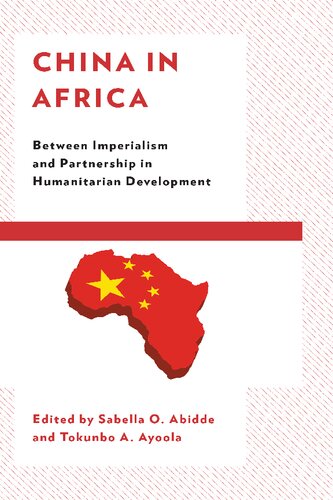
China in Africa: Between Imperialism and Partnership in Humanitarian Development
2021 · PDF

The Challenges of Refugees and Internally Displaced Persons in Africa
2021 · PDF

African Migrants and the Refugee Crisis
2021 · PDF

African Migrants and the Refugee Crisis
2021 · EPUB

MySQL® Notes for Professionals book
2018 · PDF

MrExcel 2022: Boosting Excel
2022 · PDF

MrExcel 2022: Boosting Excel
2022 · PDF