Hitler's Defeat In Russia
Book information
Description
To both professional soldiers and historians, the causes of the German catastrophe in Eastern Europe in the years from 1941 to 1945 will ever remain an absorbing problem. Hitler's hitherto invincible Wehrmacht, between September 1939 and June 1941, had knocked over like tenpins the far from negligible armies of Poland, France, and Yugoslavia; had driven three-hundred-odd thousand British from the continent in a campaign of a few brief weeks; and had spread the rule of Hitler's Reich from Brest to Crete and from Arctic Narvik to the desert sands of Tripoli. Why did this Wehrmacht come to a dead halt before Moscow within six months of launching its all-out assault on the Soviet Union? Why, once again in the autumn of 1942, did the Wehrmacht suffer such an overwhelming defeat at Stalingrad, after occupying nearly half of European Russia; reducing the Red armies to less than two and one half million men at the beginning of 1942; and planting the swastika on Mount Elbrus in the Caucasus, more than 1,000 miles from its advanced base in Poland? These are questions General Anders attempts to answer in the present analytical study of the Russo-German war, with amazing clarity and unanswerable logic.
Similar books

de AS 158: Nederlandse Anarchisten in de tweede Wereldoorlog
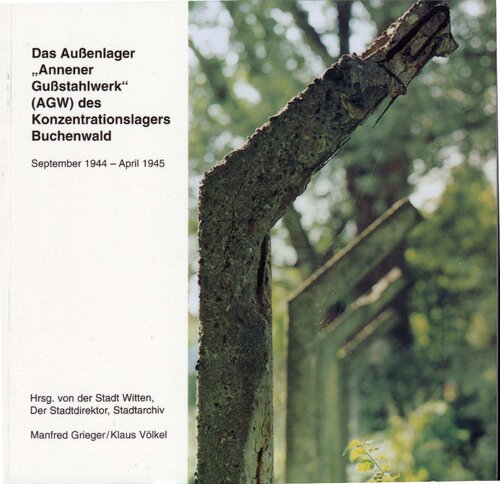
Das Außenlager "Annener Gußstahlwerk" (AGW) des Konzentrationslagers Buchenwald September 1944 - April 1945
1997 · PDF

The Frontier of Patriotism: Alberta and the First World War
2016 · EPUB

Italian Prisoners of War in Pennsylvania: Allies on the Home Front, 1944-1945
2016 · EPUB

Ancestor's Footsteps: The Somme 1916
2016 · EPUB

The Home Front: Derbyshire in the First World War
2016 · EPUB

Japanese Americans: From Relocation to Redress
1992 · PDF

Victoria Crosses on the Western Front, 31st July 1917-6th November 1917, Second Edition: Third Ypres 1917
2017 · EPUB