Amphibian Biology, Volume 11, Part 3: Status of Conservation and Decline of Amphibians: Eastern Hemisphere: Western Europe
Book information
Description
Amphibian species around the world are unusually vulnerable to a variety of threats, by no means all of which are properly understood. Volume 11 in this major series will be published in parts devoted to the causes of amphibian decline and to conservation measures in regions of the world; this Part 3 is concerned with Western Europe (Britain, Ireland, The Netherlands, Belgium, France, Spain and Portugal). Experts from each country contribute a chapter describing the ecological background and the conservation status of affected species, with an emphasis on native species. As well as infectious diseases and parasites (also covered in a general chapter), threats take the form of introduced and invasive species, pollution, destruction and alteration of habitat, and climate change. These are discussed as they affect each species. All these countries have monitoring schemes and conservation programmes, whose origins and activities are described. Recommendations for action are also made. Edited by leading scholars in the field, Volume 11, when complete, will therefore provide a definitive survey of the amphibian predicament and a stimulus to further research with the objective of arresting the global decline of an entire class of animal. Title page Contents Contributors 31 Infectious diseases that may threaten Europe’s amphibians I. Introduction II. Viruses A. Ranavirosis B. Herpesvirosis III. Bacteria IV. Fungi A. Chytridiomycosis V. Oomycetes A. Saprolegniosis VI. Mesomycetozoea A. Amphibiocystidium sp. VII. Protozoa VIII. Metazoa IX. Concluding remarks X. References 32 Conservation and declines of amphibians in Ireland I. Introduction II. The Irish amphibians A. Lissotriton vulgaris B. Rana temporaria C. Bufo [Epidalea] calamita III. Conservation measures and monitoring programmes IV. Status of Irish amphibians on the red data list V. Conclusions VI. References 33 Amphibian declines and conservation in Britain I. Introduction II. Amphibian declines and conservation measures A. The great crested newt (Triturus cristatus) B. The pool frog (Pelophylax lessonae) C. The natterjack toad (Bufo [Epidalea] calamita) D. The common toad (Bufo bufo) E. The agile frog (Rana dalmatina) F. Other species and issues G. Species’ status III. Monitoring of amphibians in Britain IV. Conclusions V. Acknowledgements VI. References 34 Conservation and declines of amphibians in The Netherlands I. Introduction II. Declining species and species of special conservation concern A. Bombina variegata B. Salamandra salamandra C. Hyla arborea D. Pelobates fuscus E. Triturus cristatus F. Lissotriton helveticus G. Alytes obstetricans H. Bufo calamita III. Conservation measures and monitoring programmes A. Conservation measures B. Monitoring programmes IV. Perspective V. Acknowledgements VI. References 35 Amphibian declines and conservation in Belgium I. Introduction II. Legal protection and current status of amphibians III. Species of special conservation concern A. The yellow-bellied toad (Bombina variegata) B. The treefrog (Hyla arborea) C. The common spadefoot (Pelobates fuscus) D. The common midwife toad (Alytes obstetricans) E. The fire salamander (Salamandra salamandra) F. The natterjack toad (Bufo [Epidalea] calamita) G. The great crested newt (Triturus cristatus) IV. Conservation and monitoring V. Acknowledgments VI. References 36 Amphibian declines and conservation in France I. Introduction A. Threats to amphibians in France 1. Destruction and alteration of habitats 2. Diseases 3. Non-native species II. Declining species of amphibians and species of concern for conservation A. Species with a reduced distribution in France 1. Species that reach their distributional limit in France A. Salamandra atra B. Bufo viridis C. Pelobates fuscus D. Rana arvalis 2. Narrowly distributed species that occur in France A. Calotriton asper B. Salamandra lanzai C. Rana pyrenaica B. Widely distributed species that occur in France III. Conservation measures and monitoring programmes A. National action plans B. The Natura 2000 Network and the Habitats Directive in France 1. Amphibians and the Natura 2000 Network 2. Implementation of Article 17 of the Habitats Directive C. Monitoring of amphibians in France D. Protected areas 1. National parks and nature reserves 2. Other protected areas IV. The Red List of amphibians of metropolitan France V. Conclusions VI. Acknowledgements VII. References 37 Conservation and declines of amphibians in Spain I. Introduction II. Declining species III. Conservation measures and monitoring programmes IV. Red List V. Conclusions VI. Acknowledgments VII. References 38 Conservation and declines of amphibians in Portugal I. Introduction – the country and its amphibian fauna II. Threats to amphibians III. Declining species or species of special concern for conservation IV. Conservation measures and monitoring programmes V. Conclusions VI. Acknowledgments VII. References Index
Similar books

Amphibian Biology: Status of Conservation and Decline of Amphibians: Eastern Hemisphere: Southern Europe & Turkey (Vol. 11/4) (Amphibian Biology, Vol. 11/4)
2015 · EPUB

Amphibian Biology: Status of Conservation and Decline of Amphibians: Eastern Hemisphere: Western Europe (Vol. 11/3) (Amphibian Biology, Vol. 11/3)
2013 · PDF
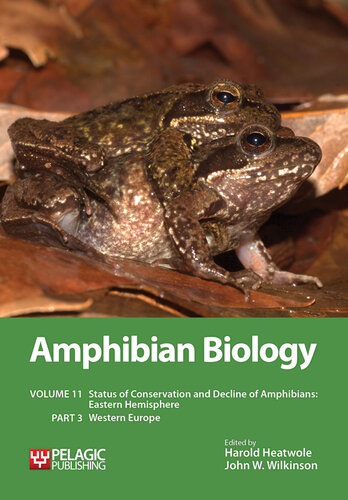
Amphibian Biology: Status of Conservation and Decline of Amphibians: Eastern Hemisphere: Western Europe (Vol. 11/3) (Amphibian Biology, Vol. 11/3)
2013 · EPUB

Amphibian Biology: Status of Conservation and Decline of Amphibians: Eastern Hemisphere: Southern Europe & Turkey (Vol. 11/4) (Amphibian Biology, Vol. 11/4)
2015 · PDF

Amphibian Biology, Volume 11, Part 4: Southern Europe and Turkey
2015 · PDF

MySQL® Notes for Professionals book
2018 · PDF

MrExcel 2022: Boosting Excel
2022 · PDF

MrExcel 2022: Boosting Excel
2022 · PDF