To Die For The People
Book information
Description
A fascinating, first-person account of a historic era in the struggle for black empowerment in America. In these selections from Newton's writings and speeches, readers can trace the development of the activist's personal and political thinking as well as the radical changes that took place in the politics, ideology, and actions of the Black Panther Party. Long an iconic figure for radicals, Huey Newton is now being discovered by those interested in the history of America's social movements. Was he a gifted leader of his people or a dangerous outlaw? Were the Black Panthers heroes or terrorists? Whether Newton and the Panthers are remembered in a positive or a negative light, no one questions Newton's status as one of America's most important revolutionaries. To Die for the People is a recently issued classic collection of his writings and speeches, tracing the development of Newton's personal and political thinking, as well as the radical changes that took place in the formative years of the Black Panther Party. With a rare and persuasive honesty, To Die for the People records the Party's internal struggles, rivalries and contradictions, and the result is a fascinating look back at a young revolutionary group determined to find ways to deal with the injustice it saw in American society. And, as a new foreword by Elaine Brown makes eminently clear, Newton's prescience and foresight make these documents strikingly pertinent today. "Huey P. Newton's To Die for the People represents one of the most important analyses of the politics of race, black radicalism, and democracy written during the civil rights-Black Power era. It remains a crucial and indispensible text in our contemporary efforts to understand the continuous legacy of social movements of the 1960s and 1970s." —Peniel Joseph, author of Waiting Til the Midnight Hour: A Narrative History of Black Power in America "Huey P. Newton's name, and more importantly, his history of resistance and struggle, is little more than a mystery for many younger people. The name of a third-rate rapper is more familiar to the average Black youth, and that's hardly surprising, for the public school system is invested in ignorance, and Huey P. Newton was a rebel — and more, a Black Revolutionary . . . who gave his best to the Black Freedom movement; who inspired millions of others to stand." —Mumia Abu Jamal, political prisoner and author of Jailhouse Lawyers "Newton's ability to see theoretically, beyond most individuals of his time, is part of his genius. The opportunity to recognize that genius and see its applicability to our own times is what is most significant about this new edition." —Robert Stanley Oden, former Panther, Professor of Government, California State University, Sacramento Huey Newton was the founder, leader, and chief theoretician of the Black Panther Party, and one of America’s most dynamic and important revolutionary philosophers. Cover Title Page Copyright Dedication Epigraph Acknowledgments Contents Introduction 1: The Party The Ten-Point Program Executive Mandate No. 1: May 2, 1967 Executive Mandate No. 2: June 29, 1967 Executive Mandate No. 3: March 1, 1968 The Correct Handling of a Revolution: July 20,1967 Speech Delivered at Boston College: November 18, 1970 Resolutions and Declarations: December 5, 1970 On the Defection of Eldridge Cleaver from the Black Panther Party and the Defection of the Black Panther Party from the Black Community: April 17, 1971 Statement: May 1, 1971 On the Relevance of the Church: May 19, 1971 II: The People Black America Fear and Doubt From "In Defense of Self-Defense" I: June 20, 1967 From "In Defense of Self-Defense" II: July 3, 1967 To the Black Movement: May 15, 1968 To the Republic of New Africa: September 13, 1969 Black Capitalism Re-analyzed I: June 5, 1971 Black Capitalism Re-analyzed II: August 9, 1971 He Won't Bleed Me: A Revolutionary Analysis of Sweet Sweetback's Baadasssss Song June 19, 1971 White America On the Peace Movement: August 15, 1969 The Women's Liberation and Gay Liberation Movements: August 15, 1970 To the Revolutionary People's Constitutional Convention: September 5, 1970 Reply to William Patterson: September 19, 1970 The Third World To the National Liberation Front of South Vietnam: August 29, 1970 Letter from Nguyen Thi Dinh: October 31, 1970 Reply to Roy Wilkins re: Vietnam: September 26, 1970 On the Middle East: September 5, 1970 Repression Breeds Resistance: January 16, 1970 Attica Statement: October 16, 1971 Uniting Against the Common Enemy: October 23, 1971 III: The Bound And The Dead Prisons: July 12, 1969 Eulogy for Jonathan Jackson and William Christmas: August 15, 1970 Lonnie McLucas and the New Haven 9: August 29, 1970 On the Capture of Angela Davis: October 17, 1970 Eulogy for Samuel Napier: May 1, 1971 On the Dismissal of the Case Against Bobby and Ericka: May 29, 1971 About the Author
Similar books

Revolutionary Suicide
2009 · PDF

Revolutionary Suicide
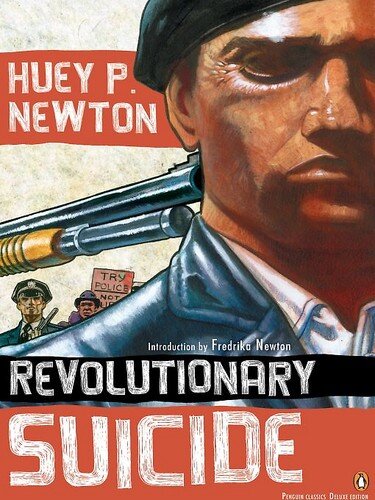
Revolutionary Suicide
2009 · EPUB

In Search of Common Ground: Conversations with Erik H. Erikson and Huey P. Newton
1973 · PDF

War Against The Panthers: A Study Of Repression In America

To die for the people: the writings of Huey P. Newton
1972 · PDF

The Huey P. Newton Reader
2003 · PDF

MySQL® Notes for Professionals book
2018 · PDF