Arsenio Rodríguez and the Transnational Flows of Latin Popular Music
Book information
Description
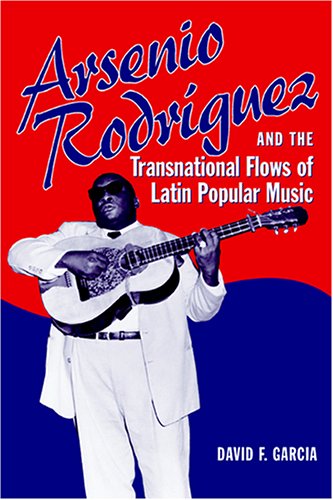
ARSENIO RODRIGUEZ (1911-70) was one of Cuba’s most important composers and musical innovators of the twentieth century. Since the late 1930s, Arsenio’s music has continued to make an indelible impact on a broad range of musical styles from the Caribbean and Latin America to West and Central Africa and beyond.' In the early 1940s Arsenio created the son montuno genre with his innovative conjunto ensemble, and by the 1950s Benny Moré, Ernest “Tito” Puente, and other Cuban, Puerto Rican, and Latin big band leaders had adopted the son montuno genre into their repertories, bringing it to a broader international audience. Contemporary musicians readily admit to the significant impact the music of Arsenio and his successors has had on their approach to performing Cuban and Latin dance music. In addition to inspiring composers, arrangers, and musicians, Arsenio’s music has been performed and rerecorded by musicians of various musical backgrounds, most recently by the Afro-Cuban All Stars, Manuel “Guajiro” Mirabal, and Rubén González of the internationally famous Buena Vista Social Club. In fact, González performed and recorded with Arsenio”s conjunto in Havana from about 1945 to 1946. In the liner notes to his CD Chanchullo (World Circuit/Nonesuch 79503-2), Gonzalez is quoted as saying: ‘‘[Arsenio] taught me many things; to always think about a solo before playing it, never to play the same thing twice and never depart from the rhythm.”’ Experimental jazz guitarist Mark Ribot has recorded two CDs of Arsenio’s music reworked for a jazz combo.” This book is the first scholarly work to document and analyze Arsenio Rodriguez’s career and music. The author is particularly interested in addressing the conflict in his volatile professional career and his music’s long-term significance to Cuban and Latin popular music history. Although Arsenio’s recorded repertory and son montuno style shaped transnational musical trends—from mambo in the 1940s and 1950s to salsa in the 1970s—his own professional viability beyond local music cultures in the Caribbean and the Cuban diaspora remained tenuous throughout his career. Arsenio Rodriguez and the Transnational Flows of Latin Popular Music Contents Preface Introduction “I Was Born of Africa”: Black Consciousness and Cubanidad Negro y Macho: Arsenio Rodriguez’s Conjunto and Son Montuno Style Who’s Who in Mambo? Remembering the Past with El Ciego Maravilloso Salsa and Arsenio Rodriguez’s Legacy Conclusion: Remembering Arsenio Rodriguez/ Remembering Son Montuno Discography Notes Bibliography Index
Similar books
Arsenio Rodríguez and the Transnational Flows of Latin Popular Music
2006 · PDF

Listening for Africa: Freedom, Modernity, and the Logic of Black Music's African Origins
2017 · PDF

Listening for Africa: Freedom, Modernity, and the Logic of Black Music’s African Origins
2017 · PDF
Arsenio Rodríguez and the Transnational Flows of Latin Popular Music
2006 · PDF

MySQL® Notes for Professionals book
2018 · PDF

MrExcel 2022: Boosting Excel
2022 · PDF

MrExcel 2022: Boosting Excel
2022 · PDF

Session C11: Ancient Cultural Landscapes in South Europe – their Ecological Setting and Evolution, Session C22: Gardeners from South America, Session S04: Agro-Pastoralism and Early Metallurgy Sessions, Session WS29: The Idea of Enclosure in Recent Iberian Prehistory, Session C88: Rhytmes et causalites des dynamiques de l'anthropisation en Europe entre 6500 ET 500 BC: Hypotheses socio-culturelles et/ou climatiques: Proceedings of the XV UISPP World Congress (Lisbon 4-9 September 2006) / Actes du XV Congrès Mondial (Lisbonne 4-9 Septembre 2006) Vol.36
2010 · PDF