Polyominoes: A Guide to Puzzles and Problems in Tiling (MAA Spectrum Series)
Book information
Description
Polyominoes will delight not only students and teachers of mathematics at all levels, but will be appreciated by anyone who likes a good geometric challenge. There are no prerequisites. If you like jigsaw puzzles, or if you hate jigsaw puzzles but have ever wondered about the pattern of some floor tiling, there is much here to interest you. A polyomino is a shape cut along the lines from square graph paper; the pronunciation of polyomino begins as does polygon and ends as does domino. Tilings, also called tessellations of mosaic patterns, are older than civilization itself. Tiling with polyominoes provides challenges that range from the popular jigsaw-like puzzles to easily understood mathematical research problems. You will find unsolved puzzles and problems of both kinds here. Answers are provided for most of the problems that have known solutions. It is only fair to repeat here the warning stated in the preface to this book, 'Playing with polyominoes can be habit forming.'
Similar books

Dundee Worthies: Reminiscences, Games and Amusements
2022 · PDF

Causes and Conflicts: The Centennial History of the Association of the Bar of NYC
2022 · PDF

Urban Food Production for Ecosocialism: Cultivating the City
2021 · PDF
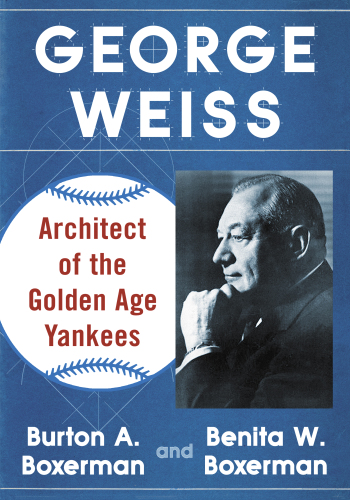
George Weiss: architect of the Golden Age Yankees
2016 · EPUB

MySQL® Notes for Professionals book
2018 · PDF

MrExcel 2022: Boosting Excel
2022 · PDF

MrExcel 2022: Boosting Excel
2022 · PDF

Session C11: Ancient Cultural Landscapes in South Europe – their Ecological Setting and Evolution, Session C22: Gardeners from South America, Session S04: Agro-Pastoralism and Early Metallurgy Sessions, Session WS29: The Idea of Enclosure in Recent Iberian Prehistory, Session C88: Rhytmes et causalites des dynamiques de l'anthropisation en Europe entre 6500 ET 500 BC: Hypotheses socio-culturelles et/ou climatiques: Proceedings of the XV UISPP World Congress (Lisbon 4-9 September 2006) / Actes du XV Congrès Mondial (Lisbonne 4-9 Septembre 2006) Vol.36
2010 · PDF