The Slaveholding Crisis: Fear of Insurrection and the Coming of the Civil War
Book information
Description
In December 1860, South Carolinians voted to abandon the Union, sparking the deadliest war in American history. Led by a proslavery movement that viewed Abraham Lincoln’s place at the helm of the federal government as a real and present danger to the security of the South, southerners—both slaveholders and nonslaveholders—willingly risked civil war by seceding from the United States. Radical proslavery activists contended that without defending slavery’s westward expansion American planters would, like their former counterparts in the West Indies, become greatly outnumbered by those they enslaved. The result would transform the South into a mere colony within the federal government and make white southerners reliant on antislavery outsiders for protection of their personal safety and wealth. Faith in American exceptionalism played an important role in the reasoning of the antebellum American public, shaping how those in both the free and slave states viewed the world. Questions about who might share the bounty of the exceptional nature of the country became the battleground over which Americans fought, first with words, then with guns. Carl Lawrence Paulus’s The Slaveholding Crisis examines how, due to the fear of insurrection by the enslaved, southerners created their own version of American exceptionalism—one that placed the perpetuation of slavery at its forefront. Feeling a loss of power in the years before the Civil War, the planter elite no longer saw the Union, as a whole, fulfilling that vision of exceptionalism. As a result, Paulus contends, slaveholders and nonslaveholding southerners believed that the white South could anticipate racial conflict and brutal warfare. This narrative postulated that limiting slavery’s expansion within the Union was a riskier proposition than fighting a war of secession. In the end, Paulus argues, by insisting that the new party in control of the federal government promoted this very insurrection, the planter elite gained enough popular support to create the Confederate States of America. In doing so, they established a thoroughly proslavery, modern state with the military capability to quell massive resistance by the enslaved, expand its territorial borders, and war against the forces of the Atlantic antislavery movement.
Similar books

Turning Points of the American Civil War
2017 · PDF

Bloody Dawn: The Story of the Lawrence Massacre
1992 · PDF
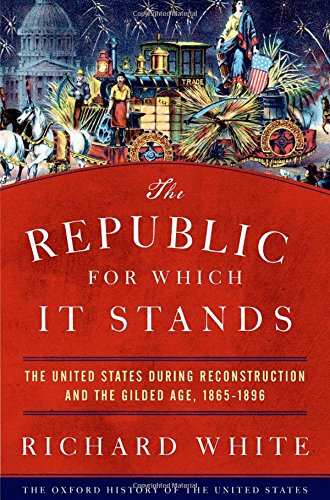
The Republic for Which It Stands: The United States during Reconstruction and the Gilded Age, 1865-1896
2017 · PDF

The Republic for Which It Stands: The United States during Reconstruction and the Gilded Age, 1865-1896
2017 · MOBI

The Republic for Which It Stands: The United States during Reconstruction and the Gilded Age, 1865-1896
2017 · EPUB

Civil War in the Southwest Borderlands, 1861-1867
2017 · PDF

Reconstruction in Alabama: From Civil War to Redemption in the Cotton South
2017 · PDF

Sharps Rifles and Spanish Mules: The San Antonio-El Paso Mail, 1851-1881
1985 · PDF