New Authoritarian Practices in the Middle East and North Africa
Book information
Description
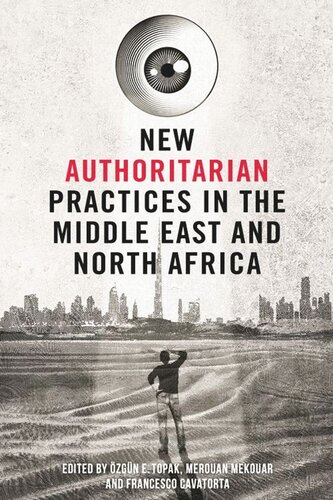
This book examines the new authoritarian practices MENA countries developed in the aftermath of the major uprisings in the region. These include new forms of digital surveillance (such as through internet, social media, and spyware), new protest policing practices, new forms of control over the judiciary, civil society and media, and new security and communication laws and state of emergencies. The book also emphasises continuities with past authoritarian practices such as intimidation, imprisonment, torture, extrajudicial killing and ill treatment of dissidents, as well as other practices to suppress dissent and control activists, opposition parties, the judiciary and the media, under new forms and through new combinations with digitally mediated practices. It is by focusing on micro-practices of repression that this book balances the more macro-structural explanations of authoritarian persistence despite widespread social discontent and opposition.
Similar books

Political Science Research in the Middle East and North Africa: Methodological and Ethical Challenges
2018 · PDF
New Authoritarian Practices in the Middle East and North Africa
2022 · PDF

Salafism After the Arab Awakening: Contending with People's Power
2017 · PDF

Routledge Handbook on Political Parties in the Middle East and North
2020 · PDF

MySQL® Notes for Professionals book
2018 · PDF

MrExcel 2022: Boosting Excel
2022 · PDF

MrExcel 2022: Boosting Excel
2022 · PDF

Session C11: Ancient Cultural Landscapes in South Europe – their Ecological Setting and Evolution, Session C22: Gardeners from South America, Session S04: Agro-Pastoralism and Early Metallurgy Sessions, Session WS29: The Idea of Enclosure in Recent Iberian Prehistory, Session C88: Rhytmes et causalites des dynamiques de l'anthropisation en Europe entre 6500 ET 500 BC: Hypotheses socio-culturelles et/ou climatiques: Proceedings of the XV UISPP World Congress (Lisbon 4-9 September 2006) / Actes du XV Congrès Mondial (Lisbonne 4-9 Septembre 2006) Vol.36
2010 · PDF