Reasons and Empty Persons: Mind, Metaphysics, and Morality: Essays in Honor of Mark Siderits
Book information
Description
Best known for his groundbreaking and influential work in Buddhist philosophy, Mark Siderits is the pioneer of “fusion” or “confluence philosophy", a boldly systematic approach to doing philosophy premised on the idea that rational reconstruction of positions in one tradition in light of another can sometimes help address perennial problems and often lead to new and valuable insights. Exemplifying the many virtues of the confluence approach, this collection of essays covers all core areas of Buddhist philosophy, as well as topics and disputes in contemporary Western philosophy relevant to its study. They consider in particular the ways in which questions concerning personal identity figure in debates about agency, cognition, causality, ontological foundations, foundational truths, and moral cultivation. Most of these essays engage Siderits’ work directly, building on his pathbreaking ideas and interpretations. Many deal with issues that have become a common staple in philosophical engagements with traditions outside the West. Their variety and breadth bear testimony to the legacy of Siderits’ impact in shaping the contemporary conversation in Buddhist philosophy and its reverberations in mainstream philosophy, giving readers a clear sense of the remarkable scope of his work. Acknowledgments Contents Contributors Introduction 1 Observations of a Life in Buddhist Letters 2 The Confluence Approach: Genealogy, Problem-solving, and the Challenge of Naturalism 3 A Brief Outline of the Central Questions References Part I: Mind But Aren’t We Conscious? A Buddhist Reflection on the Hard Problem 1 What is Deflationism? 2 The Problems of Deflationism 3 Madhyamaka and the Hard Problem 4 Theory and Practice References Reasons and Conscious Persons 1 Introduction 2 Reductionism and Personal Identity 3 Buddhist Reductionism, Personalism, and the No-Self View 4 Reflexivity, Agency, and the Unity of Conscious Experience 5 Conclusion References Descartes and the Buddha—a rapprochement? 1 Introduction: Substance 2 Duration and God 3 Cogitatio = Consciousness 4 C is a Consciousness-Process 5 Substance and Attribute 6 Substance and Attribute 2 7 The Powers of the Mind 8 The Cartesian Brain 9 ‘Thin’ Subjects 10 Mind and Matter 11 A Leibnizian Solution? 12 Lichtenberg References The Imperfect Reality of Persons 1 Suffering: The Cause, and the Cure 2 Was the Buddha the First Bundle Theorist? 3 Why Persons Are Not Merely Conceptual Fictions 4 The Objectivity of Person-Involving Conceptual Schemes 5 Two Problems for Vasubandhu’s Reductionism Eliminating Selves, Reducing Persons 1 Mereological Nihilism and Two Truths 2 Problems with Mereological Nihilism 3 Vasubandhu Against Selves 4 Vasubandhu Against Persons 5 Selves and Persons References The Curious Case of the Conscious Corpse: A Medieval Buddhist Thought Experiment 1 Preamble 2 Zahavi’s Critique 3 The Corpse Man in the Da zhidu lun 4 The Genealogy of the Corpse-man Tale 5 Final Thoughts References How Can Buddhists Account for the Continuity of Mind After Death? 1 Introductory Remarks 2 Goodman 2.1 Constructions and Anti-foundationalism 2.2 Three Premises and One Dilemma 2.3 Further Worries 3 Interface Theory/Irrealism 4 Boltzmann Brains 5 Conclusion References What’s in a Concept? Conceptualizing the Nonconceptual in Buddhist Philosophy and Cognitive Science 1 Seeing Blue 2 A View from Cognitive Science 3 The Apoha Theory 4 Conceptualism Versus Nonconceptualism 5 Nonconceptual Awareness 6 An Enactive Approach to Concepts On Necessary Connection in Mental Causation––Nāgārjuna’s Master Argument Against the Sautrāntika-Vasubandhu: A Mādhyamika Response to Mark Siderits 1 Introduction 2 The Deep Dependent Origination Argument 3 The Radical Dependent Origination Argument 4 Conclusion References Part II: Metaphysics A Post-Reductionist Buddhism? 1 Introduction 2 Buddhist Reductionism 3 The Madhyamaka Critique 4 Dismal Slough 5 Post-Reductionism 6 Conclusion References Madhyamaka, Ultimate Reality, and Ineffability 1 Introduction 2 The MMK 3 Paradox 4 Commentators on the MMK 5 Advaita Vedānta 6 The Ultimate Truth is That There is No Ultimate Truth 7 Conclusion References The Real According to Madhyamaka, Or: Thoughts on Whether Mark Siderits and I Really Disagree 1 Introduction: On Taxi Cabs and Two Truths 2 On How It Can Be Ultimately True That There Is No Ultimate Truth 3 On How to Understand the Conventional: Candrakīrti’s Vestigial Personalism 4 On “Showing Up”: Making Things Out Versus Making Them Up References Anti-Realism and Realism About the Past: A Present for Mark Siderits Buddhist Shipping Containers 1 Siderits on Priest 2 On Nāgārjuna’s Ontological Paradox 3 The Inclosure Schema and the Domain Principle 4 The Domain Principle in the Indian Context 5 The Domain Principle in the Chinese Context 6 Buddhist Shipping Containers References Finite and Infinite: On Not Making ‘Them’ Different Enough 1 Introduction 2 On Not Making Different Enough 3 Ontic Versus Ontological 4 An Entity or An Ability? 5 Different Notions of ‘Infinity’ 6 Everyday or Philosophical Use? 7 Mathematical Infinity 8 Infinity as ‘Not Finite’ 9 ‘Taming’ Infinity Mathematically 10 Treating Infinity as a Number 11 ‘Getting Inspiration’ and ‘Looking Back’ 12 Conclusion: Making Different Without Mystifying References Part III: Epistemology Mark Siderits on Anumāna 1 Introduction 2 Formulation of the Example Statement 3 The Tarkabhāṣā on anumāna 4 Dignāga on sapakṣa, asapakṣa/vipakṣa and pakṣa 5 Reasoning from anvaya and vyatireka 6 Pervasion (vyāpti) References Abbreviations Buddhist Reductionism, Fictionalism, and Expressibility 1 Introduction 2 Two Truths in Abhidharma Traditions 3 Buddhist Reductionism and Sider-Style Fictionalism 4 Inexpressibility of Sider-Style Fictionalism 5 Goodman’s Walton-Inspired Alternative Formulation of Conventional Truth 6 Expressibility 7 The Ultimate Truth About Conventional Truth 8 Conclusion References The Presupposition Strategy and the Two Truths 1 Introduction 2 The Presupposition Strategy 3 The Pragmatic Turn in Presupposition Theory 4 Assessing the Pragmatic Challenges 5 Nonconceptualist and Interdependence Accounts of Emptiness 6 Conclusion: Nonconceptualist and Anti-Realist Accounts of Emptiness References Part IV: Morality Ideas and Ethical Formation: Confessions of a Buddhist-Platonist 1 Buddhist Ethics as Virtue Ethics? 2 Reality Is Impersonal; the Task Is to Know It 3 Knowing Impersonal Reality and Ethical Formation 4 Modes of Transformation: Meditation and Narratives 5 Conclusion References Self-Cultivation Philosophy as Fusion Philosophy: An Interpretation of Buddhist Moral Thought 1 Chinese Philosophy: Xunzi 2 The Idea of Self-Cultivation Philosophy 3 Greek Philosophy: Epicurus 4 Indian Philosophy: Buddhism 5 Buddhist Self-Cultivation Philosophy: Past and Future References Can We Know Whether Śāntideva Was a Consequentialist? References Selfhood and Resentment 1 Preliminary Claims and Disclaimers 2 Preliminary Justifications 3 Agency and Selfhood 4 Nobody Home? 5 Freedom of the Mind 6 The Pudgalavādins, Perspectivalism, and Stealth Skillful Means 7 Self-Development or Self-Destruction? 8 Conclusion References Publications of Mark Siderits Index
Similar books

Reasons and Empty Persons: Mind, Metaphysics, and Morality: Essays in Honor of Mark Siderits
2023 · EPUB

Perceiving Reality: Consciousness, Intentionality, and Cognition in Buddhist Philosophy
2012 · EPUB
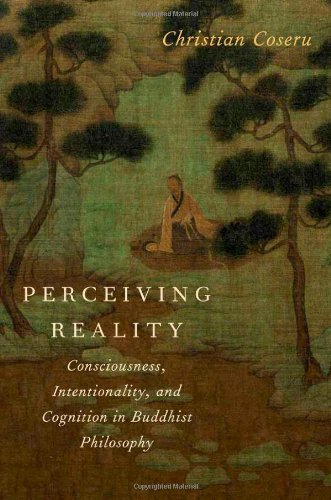
Perceiving Reality: Consciousness, Intentionality, and Cognition in Buddhist Philosophy
2012 · EPUB

MySQL® Notes for Professionals book
2018 · PDF

MrExcel 2022: Boosting Excel
2022 · PDF

MrExcel 2022: Boosting Excel
2022 · PDF

Session C11: Ancient Cultural Landscapes in South Europe – their Ecological Setting and Evolution, Session C22: Gardeners from South America, Session S04: Agro-Pastoralism and Early Metallurgy Sessions, Session WS29: The Idea of Enclosure in Recent Iberian Prehistory, Session C88: Rhytmes et causalites des dynamiques de l'anthropisation en Europe entre 6500 ET 500 BC: Hypotheses socio-culturelles et/ou climatiques: Proceedings of the XV UISPP World Congress (Lisbon 4-9 September 2006) / Actes du XV Congrès Mondial (Lisbonne 4-9 Septembre 2006) Vol.36
2010 · PDF

THE BRITISH ARMY IN INDIA: ITS PRESERVATION BY AN APPROPRIATE CLOTHING, HOUSING, LOCATING, RECREATIVE EMPLOYMENT, AND HOPEFUL ENCOURAGEMENT OF THE TROOPS. with AN APPENDIX ON INDIA : THE CLIMATE OP ITS HILLS ; THE DEVELOPMENT OF ITS RESODRCBS, INDUSTRY, AND ARTS ; THE ADMINISTRATION OF JUSTICE ; THE BLACK ACT ; THE PROGRESS OF CHRISTIANITY ; THE TRAFFIC IN OPIUM ; THE VALUE OF INDIA ; PERMANENT CAUSES OF DISAFFECTION, AND OF THE RECENT REBELLION ; THE TRADITIONARY POLICY; MISGOVERNMENT BY NATIVE RULERS ; ANNEXATIONS OF THEIR TERRITORY, ETC.
1858 · PDF