Persia in Early Modern English Drama, 1530–1699: The Imagined Empire
Book information
Description
This book is a study of the representation of the Persian empire in English drama across the early modern period, from the 1530s to the 1690s. The wide focus of this book, encompassing thirteen dramatic entertainments, both canonical and little-known, allow it to trace the changes and developments in the dramatic use of Persia and its people across one and a half centuries. It explores what Persia signified to English playwrights and audiences in this period; the ideas and associations conjured up by mention of ‘Persia’; and where information about Persia came from. It also considers how ideas about Persia changed with the development of global travel and trade, as English people came into people with Persians for the first time. In addressing these issues, this book provides an examination not only of the representation of Persia in dramatic material, but of the broader relationship between travel, politics and the theatre in early modern England. Acknowledgements Praise for Persia in Early Modern English Drama, 1530–1699 Contents 1 Introduction: The Imagined Empire Robert Brancetour: The First English Traveller to Safavid Persia Early Modern English Theatre and the East: The Place of Persia and Plays of Persia Tudor Plays of Persia Plays of Persia in the Stuart Period and the Inter-Regnum Restoration Plays of Persia 2 ‘In This Noble Region’: Politics and Counsel in The Godly Queene Hester (Anonymous, c. 1530) Introduction Godly Queene Hester Hester: The Political Contexts Conclusion 3 ‘[A]dvice Unto a Prince’: Kingship and Counsel in Kyng Daryus (Anonymous, 1565) and Cambises (Thomas Preston, c. 1560) Introduction Kyng Daryus Cambises 4 ‘A Crown Enchas’d with Pearl and Gold’: Wealth and Absolute Rule in The Warres of Cyrus (Richard Farrant, 1576–1580) and Tamburlaine the Great Parts 1 and 2 (Christopher Marlowe, 1587–1588) Introduction: Persian Gold The Warres of Cyrus Tamburlaine the Great Parts 1 and 2 Conclusion 5 ‘I Wish to Be None Other but as He’: Friendship and Counsel in The Travailes of the Three English Brothers (1607) by John Day, William Rowley, and George Wilkins and Contemporary Closet Drama Introduction: Perceptions of Persia at the Turn of the Century Alexander, Daniel, and the Revival of Classical Persia The Sherley Brothers and Persia in Early Modern English Travel Writing The Travailes of the Three English Brothers (1607) Conclusion 6 ‘Read[ing] Philosophy to a King’: Ideals of Monarchy in William Cartwright’s The Royall Slave (1636) Introduction: The Sherleys and the Failure of a ‘Diplomatic Fiction’ William Cartwright and The Royall Slave Kingship in The Royall Slave Conclusion: Detaching from Contemporary Persia 7 ‘[R]eally Acted in Persia’: Counsel, Regicide and Restoration in John Denham, the Sophy (1642) and Robert Baron, Mirza (1655) Introduction: Persia and the Divine Right of Kings The Sophy Mirza Conclusion 8 To ‘Dispose of Crowns’: Conversion, the Authority of Monarchy and the Issue of Succession: Elkanah Settle’s Cambyses (1667) Introduction: Cambyses’ Dedication Conversion and Identity Authority in Cambyses Conclusion 9 ‘The King, Who Loves the Persian Mode’: Tyranny and Excess in Nathaniel Lee’s The Rival Queens (1677) Introduction: The Rival Queens Alexander Alexander: Effeminacy and Excess Alexander: Tyranny in Context Conclusion 10 ‘[D]evour’d by Luxury’: Gender, Governance and Absolute Kingship in John Crowne’s Darius, King of Persia (1688) and Colley Cibber’s Xerxes (1699) Introduction: Crisis of Political Authority John Crowne, Darius and Two Modes of Kingship Darius and Persia Colley Cibber, Xerxes, Rebellion and the Divine Right of Kings Conclusion Bibliography Index
Similar books
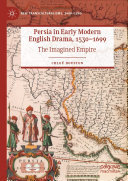
Persia in Early Modern English Drama, 1530–1699: The Imagined Empire
2023 · EPUB

New Worlds Reflected: Travel and Utopia in the Early Modern Period
2010 · EPUB

New Worlds Reflected: Travel and Utopia in the Early Modern Period
2010 · PDF

The Renaissance Utopia: Dialogue, Travel and the Ideal Society
2014 · PDF

MySQL® Notes for Professionals book
2018 · PDF

MrExcel 2022: Boosting Excel
2022 · PDF

MrExcel 2022: Boosting Excel
2022 · PDF

Session C11: Ancient Cultural Landscapes in South Europe – their Ecological Setting and Evolution, Session C22: Gardeners from South America, Session S04: Agro-Pastoralism and Early Metallurgy Sessions, Session WS29: The Idea of Enclosure in Recent Iberian Prehistory, Session C88: Rhytmes et causalites des dynamiques de l'anthropisation en Europe entre 6500 ET 500 BC: Hypotheses socio-culturelles et/ou climatiques: Proceedings of the XV UISPP World Congress (Lisbon 4-9 September 2006) / Actes du XV Congrès Mondial (Lisbonne 4-9 Septembre 2006) Vol.36
2010 · PDF