Revolutionary Dreams: Utopian Vision and Experimental Life in the Russian Revolution
Book information
Description
The revolutionary ideals of equality, communal living, proletarian morality, and technology worship, rooted in Russian utopianism, generated a range of social experiments which found expression, in the first decade of the Russian revolution, in festival, symbol, science fiction, city planning, and the arts. In this study, historian Richard Stites offers a vivid portrayal of revolutionary life and the cultural factors--myth, ritual, cult, and symbol--that sustained it, and describes the principal forms of utopian thinking and experimental impulse. Analyzing the inevitable clash between the authoritarian elements in the Bolshevik's vision and the libertarian behavior and aspirations of large segments of the population, Stites interprets the pathos of utopian fantasy as the key to the emotional force of the Bolshevik revolution which gave way in the early 1930s to bureaucratic state centralism and a theology of Stalinism.
Similar books

The Women's Liberation Movement in Russia: Feminism, Nihilsm, and Bolshevism, 1860-1930 - Expanded Edition
2021 · PDF
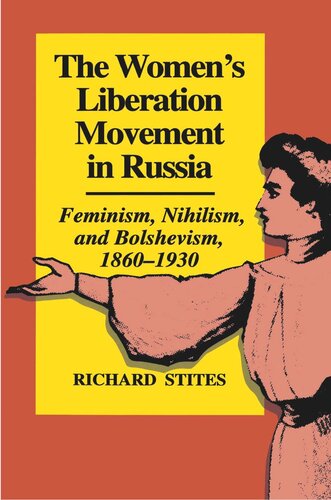
The Women's Liberation Movement in Russia: Feminism, Nihilsm, and Bolshevism, 1860-1930 - Expanded Edition
2021 · PDF

Serfdom, Society, and the Arts in Imperial Russia: The Pleasure and the Power
2008 · PDF

Russian Popular Culture - Entertainment and society since 1900
1990 · PDF

Memoirs of a Revolutionist
1991 · PDF

The Women’s Liberation Movement in Russia: Feminism, Nihilism, and Bolshevism, 1860-1930

The Four Horsemen: Riding to Liberty in Post-Napoleonic Europe
2014 · PDF

Revolutionary Dreams: Utopian Vision and Experimental Life in the Russian Revolution
1988 · PDF