A Grammar of the Arabic Language (volume 1 and 2 combined)
Book information
Description
Wright's Grammar of the Arabic Language, also known as Cambridge Reference Grammar, is useful as a reference book for clarifying aspects of the Arabic Grammar. Perhaps ideal as supplement to whatever material one may be learning Arabic Grammar from, say for example, from Nahmad & Haywood. A useful resoource for students of Arabic Grammar. This pdf has both volume 1 and 2 of Wright's Arabic Grammar combined into a single pdf. The page numbers of volume 1 is paginated as '1.n'. That is, if you intend to directly go to page 30 of the volume 1, go to page ' 1.30 '. Likewise, page numbers of volume 2 is paginated as '2.n'. Thus, The contents-page for volume 1 is at page ' 1.i ', and the contents-page for volume 2 is at ' 2.i ' The pdf also has TOC bookmarks for easy access. VOLUME 1 (pages 1.n) Preliminaries Title page Preface to the third edition Preface to the second edition CONTENTS page (of Volume 1) [page 1.i] PART FIRST - ORTHOGRAPHY AND ORTHOEPY I. The Letters as Consonants II. The Vowels and Diphthongs III. Other Orthographic Signs A. Gezma or Sukun B. Tesdid or Sedda C. Hemza or Nebra D. Wasla E. Medda or Matta IV. The Syllable V. The Accent VI. The Numbers PART SECOND - ETYMOLOGY OR THE PARTS OF SPEECH I. THE VERB A. GENERAL VIEW 1. The Forms of the Triliteral Verb The First Form The Second Form The Third Form The Fourth Form The Fifth Form The Sixth Form The Seventh Form The Eighth Form The Ninth and Eleventh Forms The Tenth Form The Twelfth, Thirteenth, Fourteenth, and Fifteenth Forms 2. The Quadriliteral Verb and its Forms 3. The Voices 4. The States (Tenses) of the Verb 5. The Moods 6. The Numbers, Persons, and Genders B. THE STRONG VERB 1. The Active Voice of the First Form a. The Inflexion by Persons 1. Separate Pronouns 2. Suffixed Pronouns, expressing the Nominative 3. Prefixed Pronouns, expressing the Nominative b. Forms of the Tenses and Moods The Imperfect Indicative The Subjunctive and Jussive The Energetic The Imperative 2. The Passive Voice of the First Form 3. The Derived Forms of the Strong Verb 4. The Quadriliteral Verb 5. Verbs of which the Second and Third Radicals are Identical C. THE WEAK VERB 1. Verba Homzata 2. Verbs which are more especially called Weak Verbs A. Verba Primae Radicalis 'waw' et 'ya' B. Verba Mediae Radicalis 'waw' et 'ya' C. Verba Tertiae Radicalis 'waw' et 'ya' 3. Verbs that are Doubly and Trebly Weak Doubly Weak Verbs Trebly Weak Verbs Appendix A I. The Verb 'laisa' II. The Verbs of Praise and Blame III. The Forms expressive of Surprise or Wonder Appendix B The Verbal Suffixes, which express the Accusative II. THE NOUN A. THE NOUNS SUBSTANTIVE AND ADJECTIVE 1. The Derivation of Nouns Substantive and Adjective, and their different Forms a. The Deverbal Nouns (i) The Nomina Verbi (ii) The Nomina Vicis (iii) The Nomina Speciei (iv) The Nomina Loci et Temporis (v) The Nomina Instrumenti (vi) The Nomina Agentis et Patientis and other Verbal Adjectives b. The Denominative Nouns (i) The Nomina Unitatis (ii) The Nomina Abundantiae vel Multitudinis (iii) The Nomina Vasis (iv) The Nomina Eelativa or Relative Adjectives I. Changes of the Auxiliary Consonants II. Changes of the Final Radicals 'waw' and 'ya' III. .Changes in the Vocalisation (v) The Abstract Nouns of Quality (vi) The Diminutive (vii) Some other Nominal Forms 2. The Gender of Nouns Formation of the Feminine of Adjectives Forms which are of both Genders 3. The Numbers of Nouns The Dual The Pluralis Sanus The Pluralis Fractus 4. The Declension of Nouns I. The Declension of Undefined Nouns Diptotes II. The Declension of Defined Nouns Appendix The Pronominal Suffixes, which denote the Genitive B. THE NUMERALS 1. The Cardinal Numbers 2. The Ordinal Numbers 3. The remaining Classes of Numerals C. THE NOMINA DEMONSTRATIVA AND CONJUNCTIVA 1. The Demonstrative Pronouns and the Article 2. The Conjunctive (Relative) and Interrogative Pronouns (a) The Conjunctive Pronouns (b) The Interrogative Pronouns 3. The Indefinite Pronouns III. THE PARTICLES A. THE PREPOSITIONS The Inseparable Prepositions The Separable Prepositions B. THE ADVERBS The Inseparable Adverbial Particles The Separable Adverbial Particles Adverbial Accusatives C. THE CONJUNCTIONS The Inseparable Conjunctions The Separable Conjunctions D. THE INTERJECTIONS PARADIGMS OF THE VERBS VOLUME 2 (pages 2.n) Preliminaries Title Page ADDENDA ET CORRIGENDA. CONTENTS PAGES (of Volume 2) [page 2.i] PART THIRD - SYNTAX. I. THE SEVERAL COMPONENT PARTS OF A SENTENCE. A. THE VERB. 1. The States or Tenses (Perfect, Imperfect indicative) 2. The Moods (Subjunctive, Jussive, Energetic) 3. The Government of the Verb (The Accusative, Prepositions) a) The Accusative (i. The Objective Complement, ii. The Adverbial Complement.) b) Prepositions (Simple prepositions, compound prepositions etc.) B. THE NOUN. 1. The Nomina Verbi or Actionis, Agentis, and Patientis 2. The Government of the Noun (The Status Constructus and the Genitive etc.) 3. The Numerals (Numbers, dates, days of months etc) II. THE SENTENCE AND ITS PARTS A. THE SENTENCE IN GENERAL 1. The Parts of a Sentence (The Subject and Predicate, their Complements) 2. Concord in Gender and Number between the Parts of a Sentence (in Verbal Sentences and Nominal Sentences) B. THE DIFFERENT KINDS OF SENTENCES 1. Negative and Prohibitive Sentences (eg. using la, ma etc) 2. Interrogative Sentences (eg using 'a', 'hal' etc) 3. Relative Sentences (Definite and indefinte sentences, connecting pronoun, 'alladhee' etc.) 4. Copulative Sentences (eg. using 'fa', 'wa', 'wa la' etc.) 5. Adversative, Restrictive, and Exceptive Sentences 6. Conditional and Hypothetical Sentences PART FOURTH - PROSODY I. THE FORM OF ARABIC POETRY. The Rhyme, different Metres (Ragez, Sari, Kamil etc) II. THE FORMS OF WORDS IN PAUSE AND RHYME III. POETIC LICENSES PART THIRD - SYNTAX I. THE SEVERAL COMPONENT PARTS OF A SENTENCE A. THE VERB 1. The States or Tenses The Perfect The Perfect as an Optative The Perfect preceded by قَدْ The Perfect as the Pluperf. Indic The Perfect as the Pluperf. Subjunct., in two correlative hypothetical clauses, after لَوْ , etc The Perfect after أِذَا The Perfect after أِنْ The Perfect in two correlative conditional clauses, after أِنْ , etc The Perfect after مَا الدَّيْمُومَةِ The Imperfect Indicative The Latin and Greek Imperfect, كَانَ يَفْعَلُ The Future-Perfect, يَكُونُ (قَدْ) فَعَلَ The Imperfect Subjunctive The Jussive The Jussive, after لَمْ and لَمَّا The Jussive, in two correlative conditional clauses, after إِنْ, etc The Energetic 2. The Moods The Subjunctive The Subjunctive after أَنْ, لَّا, أَن or أَلَّا, and لَنْ The Subjunctive after لِ, كَيْ, etc The Subjunctive after حَتَّي The Subjunctive after فَ The Subjunctive after وَ The Subjunctive after ثُمَّ The Subjunctive after أَوْ The Subjunctive after إِذًا or إِذَنْ The Jussive The Jussive after لِ The Jussive after لَا The Jussive in two correlative conditional clauses, after إِنْ , etc The Jussive after لَمْ and لَمَّا The Energetic of the Imperfect The Energetic after لَ The Energetic in prohibitions (with لاَ), wishes, and questions The Energetic in the apodosis of two correlative conditional clauses The Energetic in the protasis of a sentence, after إِمَّا The Energetic after حَيْثُمَا etc The Energetic as a negative imperative, with لَا The Energetic of the Imperative 3. The Government of the Verb (a) The Accusative (i) The Objective Complement in the Accusative Two Objective Complements in the Accusative The Accusative of the مَصْدَرٌ, etc., as the absolute object, أَلْمَفْعُولُ الْمُطْلَقُ Construction of the Objective Complement and of the Subject with the Nomen Actionis Use of لِ with the Genitive to express the Objec tive Complement of the Nomen Actionis Government of the Nomina Agentis or Participles Use of لِ with the Genitive to express the Objective Complement of the Participles Construction of Verbal Adjectives Construction of Comparatives and Superlatives of the form أَفْعَلُ The Accusative after a Verb which is understood اَلتَّحْذِيرُ و الْإِغْرآءُ اَلاِخْتِصَاصُ The Accusative after إِنَّ, أَنَّ, لاكِنَّ, كَأَنَّ, لِأَنَّ The Accusative after لَيْتَ, عَلَّ, لَعَلَّ The Accusative after وَ (وَاوُ الْمَعِيَّةِ) The Vocative The Vocative after أَ, يَا, expressed by the Nominative The Vocative after أَ, يَا, expressed by the Accusative The Vocative after أَيُّهَا or يَا أَيُّهَا The Vocative after وَا The Accusative after لَا, used لِنَفْىِ الْجِنْسِ (ii) The Adverbial Complement The Predicate of كَانَ The Predicate of the أَخَوَاتُ كَانَ The Predicate of مَا and لَا, when = لَيْسَ The Predicate of إِنِ النَّافِيَةُ andof لَاتَ The Construction of the أَفْعَالُ الْمُقَارَبَةِ The Adverbial Accusative of Time The Adverbial Accusative of Place The Adverbial Accusative of State or Condition, اَلْحَالُ The Adverbial Accusative of Cause or Reason The Adverbial Accusative of Limitation or Determination The Adverbial Accusative of Construction of كَمْ, كَأَيٍ, and كَذَا The Adverbial Accusative of Comparison (b) The Prepositions The Simple Prepositions مِنْ مَتَى = مِنْ مِنْ after Comparative Adjectives عَنْ إِلَى حَتَّى لِ اَلاسْتِغَاثَةُ فِى بِ مَعَ لَدَى، لَدُنْ عَلَى مُذْ ،مُنْذُ وَ تَ كَ نَحْوَ عِنْدَ قِبَلَ بَيْنَ تَحْتَ فَوْقَ دُونَ قَبْلَ بَعْدَ أَمَامَ قُدَّامَ وَرَاءَ خَلْفَ حَوْلَ وَسْطَ The Compound Prepositions مِنْ بَيْنِ etc مِنْ عَنْ etc Prepositions in connection with a following Clause مَا redundant after مِنْ, عَنْ, and بِ Omission of the Preposition before أَنْ and أَنَّ B. THE NOUN 1. The Nomina Verbi or Actionis, Agentis, and Patientis 2. The Government of the Noun The Status Constructus and the Genitive صَاحِبٌ، ذُو, etc كُلٌّ جَمِيعٌ عَامَّةٌ سَائِرٌ بَعْضٌ غَيْرٌ سِوًى مِثْلُ شِبْهٌ مِقْدَارٌ ، قَدْرٌ زُهَآءٌ نَحْوُ كِلْتَانِ ، كِلَانِ رُبَّ بَلْ ، فَ ، (وَاوُ رُبَّ) وَ أَفْعَلُ Superlative أَيَّةٌ ، أَيٌّ A Clause, introduced by أَنْ or مَا , as a Genitive The Genitive of Restriction or Limitation, after Participles and Adjectives Interposition of a Word between the Status Constructus and the Genitive A Genitive in Apposition to a Relative Adjective in ِيٌ Definite and Indefinite Annexation Construction of أَفْعَلُ as a Superlative The Genitive of the Material Apposition of the Material The Genitive Construction in place of Apposition 3. The Numerals The Cardinal Numbers from 3 to 10 وَاحِدٌ and أَحَدٌ اِثْنَتَانِ ، اِثْنَانِ The Cardinal Numbers from 11 to 99 بِضْعٌ مِائَةٌ (100) and أَلْفٌ (1000) Compound Numbers Agreement of the Cardinal Numbers in Gender with the Nouns denoting the objects numbered When the Cardinal Numbers are determined or definite Construction of the Ordinal Numbers with the Genitive Dates The Days of the Month II. THE SENTENCE AND ITS PARTS A. THE SENTENCE IN GENERAL 1. The Parts of a Sentence The Subject and Predicate The رَابِطٌ or Connecting Pronominal Suffix The ضَمِيرُ الْفَصْلِ or Pronoun of Separation When the Inchoative or Subject of a Nominal Sentence may be an Indefinite Noun The ضَمِيرُ التَّاكِيدِ or Emphatic Pronoun Use of كَانَ, يَكُونُ, in a Nominal Sentence The Subject not specified Personal form Impersonal form The Complements of the Subject and Predicate Reflexive pronominal Suffixes نَفْسٌ , عَيْنٌ, etc., as reflexive objects Appositives, اَتَّوَابِعُ .... The Adjective Substantives مَا الْإِبْهَامِيَّةُ .... مَا هُوَ (هِيَ) , هُوَ (هِيَ) مَا هُوَ (هِيَ)، Demonstrative Pronouns عَامَّةٌ، جَمِيعٌ، كُلٌ جَمْعَاءُ، أَجْمَعُ أَبْتَعُ، أَبْصَعُ ، أَكْتَعُ نِصْفٌ، كِلْتَانِ، كِلَانِ عَيْنٌ، نَفْسٌ التَّأْكِيدُ, the Corroboration اَلنَّعْتُ or اَصِّفَةُ , the Qualificative or Adjective اَلْبَدَالُ , the Permutative عَطْفُ الْبَيَانِ , the Explicative Apposition Apposition of Verbs 2. Concord in Gender and Number between the Parts of a Sentence In Verbal Sentences In Nominal Sentences B. THE DIFFERENT KINDS OF SENTENCES 1. Negative and Prohibitive Sentences لَا لَنْ ... لَمَّا ، لَمْ مَا ... إِنِ النَّافِيَةُ لَيْسَ وَلَا after لَنْ، لَمَّا، لَمْ، مَا or لَيْسَ لَا with the Perfect, as a Future لَا with the Perfect, as an Optative لَا redundant after verbs meaning to forbid, fear, etc. followed by أَنْ with the Subjunctive (أَلَّا، أَن لَّا) Omission of لَا in Denial by oath, and its Insertion in Asseveration لَا in Prohibitions, with the Jussive and Energetic 2. Interrogative Sentences أَ أَوْ، أَمْ هَلْ أَمَّا، أَلَا لَوْمَا، لَوْلَا، هَلَّا، أَلَّا مَا، مَنْ أَيَّةٌ، أَيٌّ 3. Relative Sentences Definite and Indefinite The Connecting Pronoun, اَلْعَآئِدُ or اَلرَّاجِعُ ..... اَلَّذِى 4. Copulative Sentences فَ، وَ وَلَا after a preceding negative The Conflict in Government, اَلتَّنَازُعُ فِى الْعَمَلِ وَاوُ الْحَالِ , the Waw of the State or Circumstance 5. Adversative, Restrictive, and Exceptive Sentences لَا لَاكِنَّ، لَاكِنْ بَلْ إِنَّمَا إِلَّا .. غَيْر .. سِوَى مَا عَدَا، مَا خَلَا حَاشَى لَا يَكُونُ، لَيْسَ لَا سِيَّمَا 6. Conditional and Hypothetical Sentences فَ introducing the Apodosis of a Conditional Sentence لَوْ، إِنْ إنْ لَوْ لَ introducing the Apodosis of a Hypothetical Sentence PART FOURTH - PROSODY I. THE FORM OF ARABIC POETRY The Rhyme The Metres Ragez Sari' Kamil Wafir Hazeg Mutekarib Tawll Mudari' Mutedarik Besit Munsarih Muktadab Ramel Medid Haflf Mugtett II. THE FORMS OF WORDS IN PAUSE AND RHYME III. POETIC LICENSES Affections of the letter أ Irregularities in the use of the Tesdid Uncontracted Forms for Contracted ones Suppression of final ^j in some Nominal and Verbal forms Other Letters, and even Syllables, dropped Lengthening of a Short Vowel in the middle of a word Shortening of a Long Vowel Suppression of a Short Vowel Addition of a Final Short Vowel to some Verbal Forms and Particles Irregular Use of the Tenwin and other Case-endings Suppression of the Tenwin ِىنِ for ِينَ in the Genitive Plural of Nouns Irregularities in Verbs and Nouns derived from Radicals tertiae و vel ى Pausal Forms out of Pause
Similar books
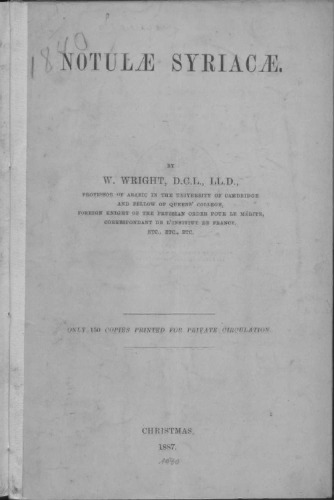
Notulae Syriacae

The Book of Jonah in four Oriental languages

ٱلْمِلَلُ ٱلْمُعَاصِرَةُ فِي ٱلدِّينِ ٱلْيَهُودِيِّ / Contemporary Sects in Judaism

العذاب الأحمر / Red Torment (Tortured for Christ)

الكتاب المقدس

Names of Deaths since October 7th in Gaza - March 23 2025 9241ed_087a5e62700a430fbe201e1368eba7b1

ما بعدَ السَّلفية : قِراءة نقديَّة للخِطاب السَّلفي المعاصِر
2015 · PDF

الملصقات
1437 · PDF